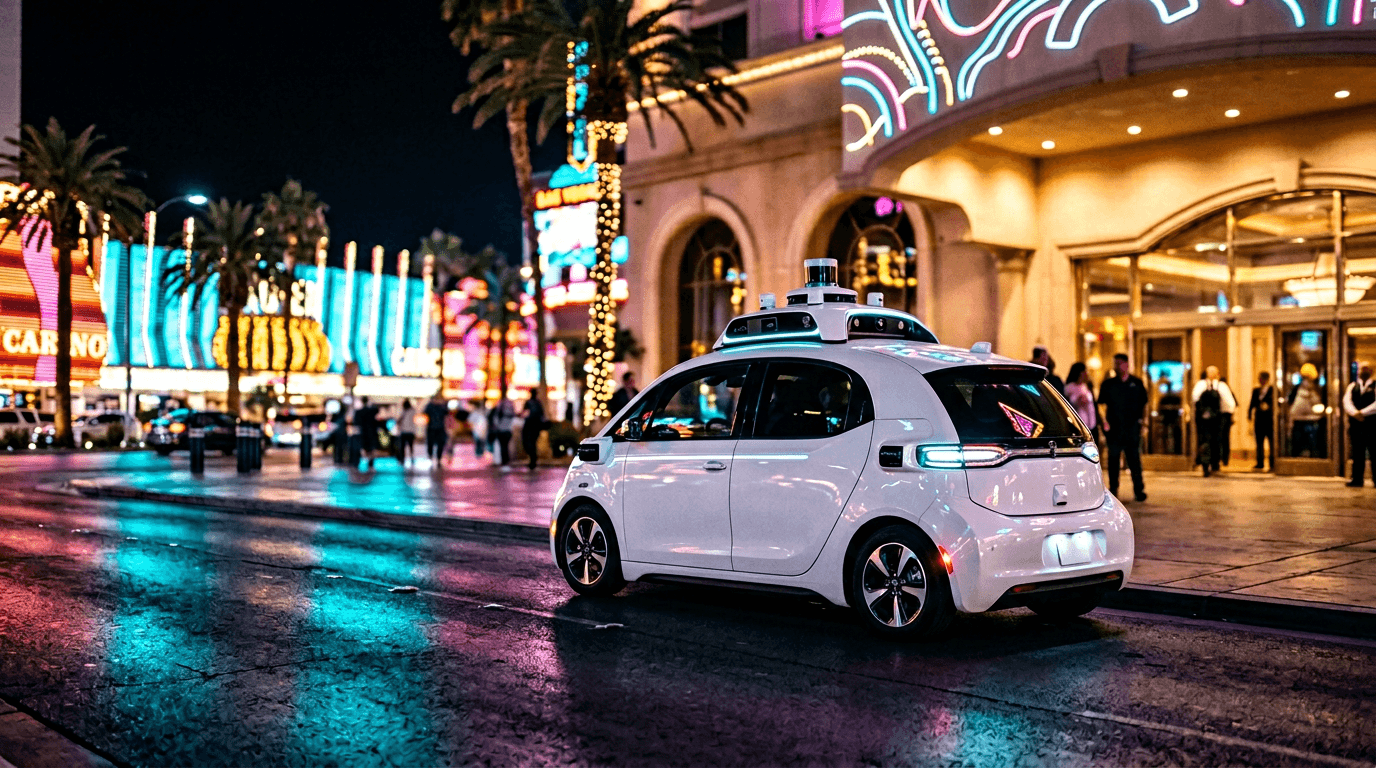
Las Vegas is one of the few cities where a first-time visitor can realistically book a driverless vehicle from their hotel to a convention center and have it work without a hitch. It is also one of the cities where the gap between that best-case experience and the frustrating edge case is widest—because the volume of simultaneous demand, the complexity of resort pickup logistics, and the patchwork of service area boundaries create more failure points than in a typical residential robotaxi market.
The first thing most first-time riders get wrong is treating a robotaxi like an ordinary rideshare. The mental model that works for Uber—open the app, tap your destination, walk to a nearby curb, and wait for whoever shows up—does not transfer cleanly. Autonomous vehicles pick up from designated staging spots that may be a short walk from where you are standing. The staging pin is the instruction, not a suggestion. If you walk toward the vehicle instead of staying at the pin, the pickup may time out.
Account setup is the other common stumbling block. Waymo One requires a completed account with a verified payment method before it will dispatch a vehicle. This sounds obvious, but in practice a surprising number of first-time riders try to set up their account while standing outside a resort hotel wanting a ride now—and hit a verification delay that kills the plan. Install the app and complete setup on reliable Wi-Fi before you arrive in Las Vegas. If SMS verification gets stuck, use a different network or retry the following morning; do not count on fixing it in a Strip hotel lobby on check-in day.
Service area edges are invisible until they matter. Waymo's Las Vegas coverage includes the core Strip corridor, the convention center, and portions of surrounding neighborhoods, but the edges shift and are not intuitively guessable from a map. If your hotel is on the northern end of the Strip or on a cross street slightly off the main corridor, check in the app before your trip rather than discovering at 11 PM that your specific block is outside the zone. Airport transfers are the most commonly cited gap: as of mid-2026, autonomous rideshare to and from Harry Reid International is not reliably available, and travelers who planned around it have been caught off-guard. Treat the airport as requiring conventional rideshare or taxi.
Convention weeks amplify every friction point. During CES in January, NAB in April, or SEMA in November, autonomous vehicle demand from convention attendees concentrates at the same exits at the same times. The Waymo One app will show vehicle wait times honestly, but those times can extend to 15–25 minutes during post-session surges. The practical workaround is the same one experienced Las Vegas convention-goers use for all rideshare: leave 15 minutes before the session formally ends, or wait 30–40 minutes after the main rush clears. Autonomous vehicles are not immune to peak demand—they are just calmer when you finally get in.
One genuinely different aspect of the autonomous experience worth knowing: the vehicle will not deviate from its route for passenger requests. If you forgot something, or want to add a stop, you have to handle that through the app interface—and some requests are simply not possible mid-trip. The vehicle will also pull over and pause if it encounters a scenario it cannot confidently resolve (a utility vehicle blocking the road, an unusual traffic pattern). This is rare but normal; the car is not broken when it pauses. In most cases it resumes within a minute or two after remote operator assistance or after the obstruction clears.
For EV travelers who are already thinking about charging and range, robotaxi adds a useful layer: you do not have to drive or park at all for trips within the service area. Using autonomous rideshare from your hotel to a concert venue and back saves your rental vehicle's battery state of charge for the longer excursions where it matters—Red Rock Canyon, Hoover Dam, or a day trip north toward Valley of Fire. Treating robotaxi as one transportation layer in a mixed strategy, rather than your exclusive option, produces the best experience for most Las Vegas visitors.