
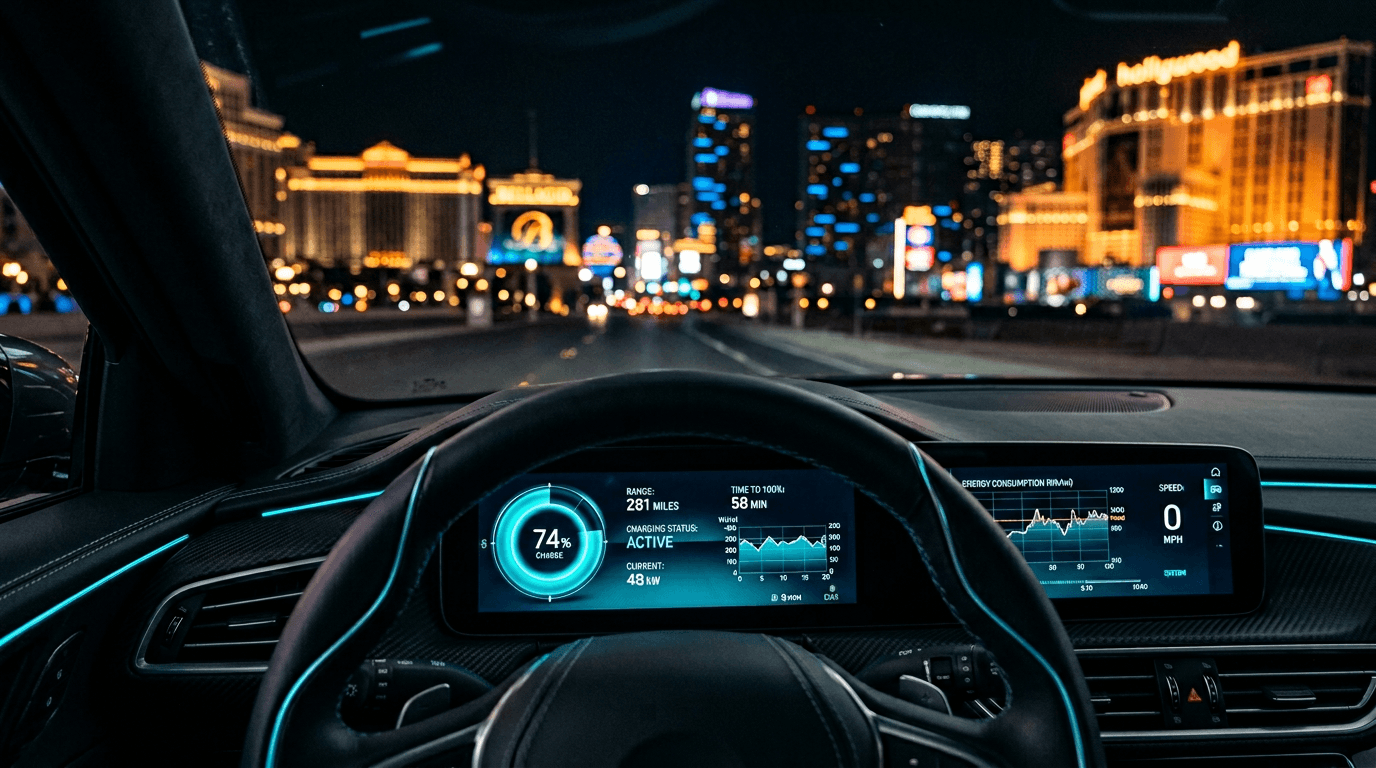
Understanding EV Charging Costs in Las Vegas
Las Vegas sits at the intersection of two variables that complicate EV charging math more than almost anywhere else in the country: extreme summer heat and a high share of visitors who are charging away from home for the first time. Understanding what drives cost and time helps you plan sessions that fit your schedule rather than guessing at a charger.
The core formula for a DC fast charging session is simple—kilowatt-hours delivered multiplied by the network's per-kWh rate. But the numbers that go into that formula shift constantly. Battery size varies widely by model and trim; a standard-range version of a vehicle may have 10–15 kWh less usable capacity than the long-range trim with the same badge. The state-of-charge window you choose matters more than most drivers realize: charging from 20% to 80% is dramatically faster than charging from 80% to 100%, because most lithium batteries taper charging speed above 80% to protect cell longevity.
Nevada summer heat introduces a real penalty. When ambient temperatures exceed 100°F—common in Las Vegas from June through September—battery thermal management systems work harder, drawing additional power that does not propel the vehicle. This reduces effective range per session by roughly 10–20% compared to the same trip at 75°F. For a planned road trip segment, this means the session cost increases even when you are targeting the same charge window.
Network rates in Las Vegas vary considerably. Tesla Superchargers price by the kWh for most vehicles using the network, with idle fees that begin a few minutes after a session completes—a meaningful issue at busy casino and resort locations during peak hours. Electrify America sites in the Nevada market have operated on both per-kWh and per-minute pricing models depending on the subscription status of the driver and the specific station; the calculator uses representative 2026 presets but always check the current rate in the network app before you plug in.
For visitors renting an EV at the airport or through a hotel concierge program, the practical target is maintaining enough state of charge to handle a full day of Strip driving plus one or two off-Strip excursions—roughly 60–80 miles of combined driving in summer conditions. A single 30-minute DC fast session from 20% to 80% at a 150 kW charger covers that for most mid-range vehicles. The cost for that session will typically fall between $12 and $22 at current Las Vegas network rates, which is often less than a tank of gas for the equivalent rental vehicle.
If you own your EV and are staying somewhere with Level 2 access—a hotel garage outlet, a ChargePoint pedestal in a valet area, or a home charger at a vacation rental—overnight charging is nearly always the more cost-effective approach. Overnight Level 2 charging at NV Energy's off-peak time-of-use rates is typically one-third to one-half the cost of a DC fast session at a commercial network. The calculator includes a gas comparison to help you frame the total cost context of either approach relative to renting a conventional vehicle.
One variable the calculator cannot account for is session start and end overhead: walking to a charger, waiting if all stalls are occupied, approving payment, and unplugging. At busy times on the Strip—Saturday evenings, post-convention evenings, and holiday weekends—add 10–20 minutes of buffer time at popular DC locations. Plan to leave before your session window closes rather than timing it exactly.