
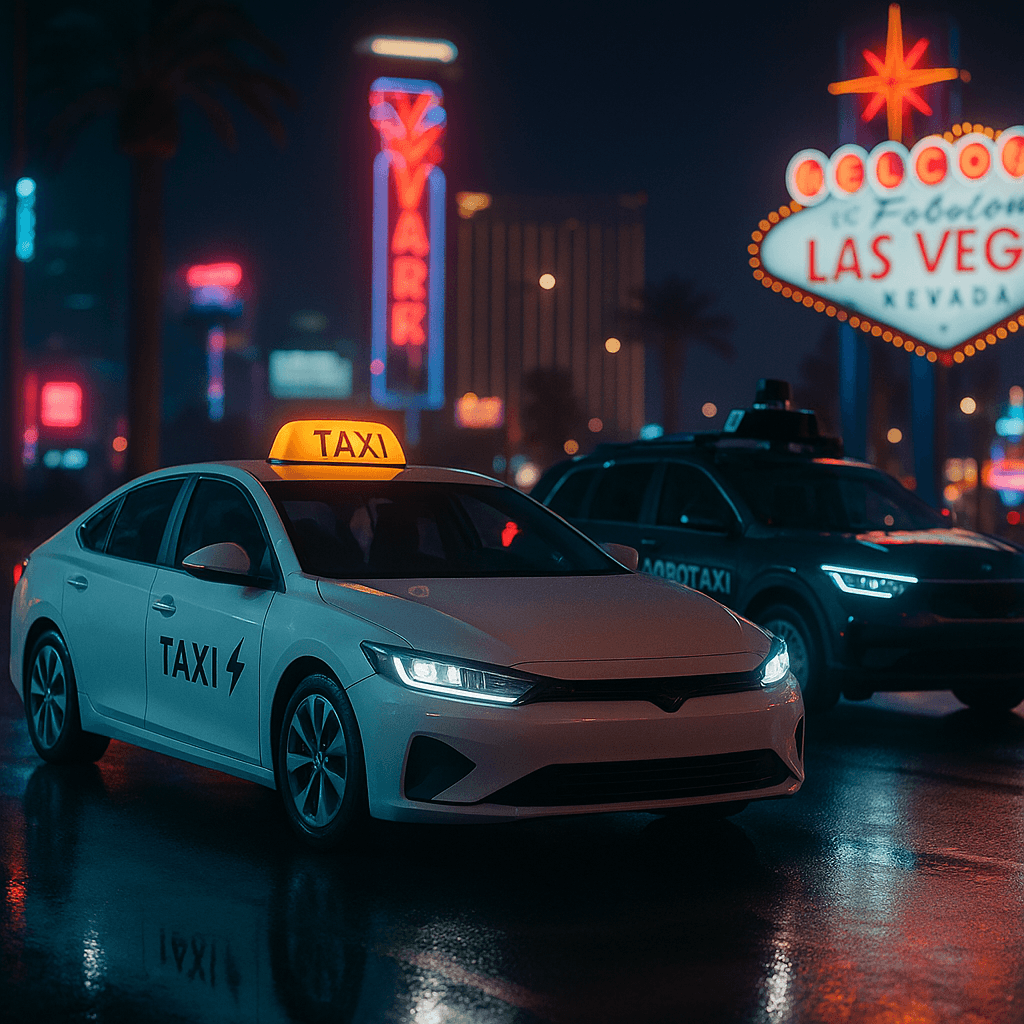
The Future of Electric Taxis and Robotaxis in Las Vegas: 2026 Outlook, Timelines, and What to Expect on the Strip
Explore the future of electric taxis and robotaxis in Las Vegas: current status, challenges, timelines to 2035, infrastructure, traveler tips, and what to watch next.
The Future of Electric Taxis and Robotaxis in Las Vegas: 2026 Outlook, Timelines, and What to Expect on the Strip
Las Vegas is built for mobility experiments. It moves millions of visitors each month between the airport, the Strip, massive convention halls, and sports arenas—often in triple-digit heat and around big-event road closures. That makes the city a high-stakes proving ground for electric taxis and emerging robotaxis.
This long-form guide explains where Vegas stands today, what’s likely next, and how the city’s unique conditions—tourism surges, climate, and regulated taxi markets—will shape the road to electric and autonomous rides over the next decade.
Key takeaways
- Las Vegas is primed for rapid electrification of taxis and rideshare because of high annual mileage, strong charging availability at resorts, and supportive Nevada policy.
- Robotaxis will expand in tightly geofenced zones and predictable corridors first (resorts, convention centers, and airport connectors), before tackling the full Strip at peak hours.
- Extreme heat, complex curb management, accessibility, and public trust are the main challenges. Solutions will include shaded/conditioned charging, better pickup design, and transparent safety reporting.
- Expect a “hybrid” decade: human-driven electric fleets grow fast while autonomous pilots scale gradually, with human oversight persisting in complex scenarios.
Where things stand today in Las Vegas (as of 2024)
- Rideshare dominates visitor trips alongside regulated taxis. Many Uber/Lyft drivers already use electric vehicles (notably Teslas and other EV sedans) due to lower total cost of ownership (TCO).
- Traditional taxi fleets are piloting and procuring EVs, especially for airport–Strip service where predictable routes and depot charging work well.
- Autonomous-vehicle (AV) pilots have operated in Las Vegas, including highly visible demonstrations during major events. Companies have provided supervised public rides (with a safety operator on board). Broader fully driverless service has been slower than early forecasts industry-wide.
- The Las Vegas Convention Center (LVCC) Loop moves riders in human-driven EVs underground; operators aim for higher automation over time, but it remains supervised driving today.
- Nevada is an early AV-regulation state, with a permitting framework for testing and deployment, plus distinct oversight for taxis, limousines, and TNCs.
- Charging is comparatively strong for a destination city: multiple DC fast-charging hubs, resort garages with Level 2, and high-power networks along I‑15. The hot climate drives unique infrastructure choices (canopies, cooled cables, and careful thermal management).
Why electric taxis will scale quickly on the Strip
Electrification makes the most sense in high-mileage, stop‑and‑go service. Vegas checks every box.
The TCO math (illustrative)
- Annual miles: 60,000–80,000 for many full-time drivers.
- Energy: A typical modern EV sedan may use ~0.27–0.33 kWh/mile in mixed urban driving. At an average commercial rate of $0.18–$0.25/kWh, energy cost lands around $0.05–$0.08/mile.
- Gas comparison: A 25 mpg hybrid/ICE at $4.00/gal costs ~$0.16/mile in fuel. Even with efficient hybrids, EVs usually beat per‑mile energy cost.
- Maintenance: Fewer moving parts, regenerative braking, and less frequent service. Tires and suspension still wear quickly in taxi duty, but overall cost tends to be lower than ICE.
- Uptime: DC fast charging plus strategic shift changes can keep utilization high. Depots and hotel garages support overnight Level 2 top-ups.
Result: Over 3–5 years, many operators find EVs materially cheaper per mile—especially when aided by federal and utility incentives for vehicles and charging.
Policy and market tailwinds
- Nevada’s clean-energy goals and utility programs encourage commercial electrification and infrastructure buildout.
- Resorts increasingly view EV-friendly mobility as a guest amenity and brand differentiator.
- Federal incentives for commercial clean vehicles and charging hardware improve the business case for fleets.
Robotaxis in Vegas: promise, reality, and the likely path forward
What makes Las Vegas attractive for AVs
- High trip density between repeatable destinations (airport, Strip resorts, convention centers, Allegiant Stadium, Sphere, T‑Mobile Arena).
- Wide arterial roads, relatively predictable corridors, and strong mapping data thanks to frequent pilots and major events like CES.
- A tourism economy open to new mobility experiences—if reliability and safety are proven.
What makes Vegas challenging
- Extreme heat stresses sensors, batteries, and cabin cooling; AVs must manage thermal limits without crippling downtime.
- Nightlife, dense pedestrian traffic, delivery vehicles, and frequent lane closures create complex curb maneuvers and edge cases.
- Mega-events (Formula 1, CES, Super Bowl, concerts) require rapid re‑geofencing and temporary traffic patterns.
- Public trust and clarity on safety remain essential; transparent reporting and consistent rider experience will be vital.
The likely adoption arc
-
Geofenced, off‑street, and semi‑private zones
- Resort campuses, convention centers, stadium perimeters, and dedicated pickup areas with clear signage.
- Low to moderate speeds, controlled curb environments, strong cellular coverage.
-
Corridor-based service at off‑peak times
- Airport–resort connectors using well-mapped arterials.
- Initially with remote assist and high-touch operations teams.
-
Broader service windows and event operations
- Expansion to peak hours as systems prove reliable under complex curbside conditions and crowd surges.
-
Citywide mixed-traffic service
- Full Strip coverage and downtown integration, subject to regulatory milestones, insurance frameworks, and sustained safety performance.
Timelines: conservative, base, and optimistic scenarios (2025–2035)
- Conservative
- 2025–2027: Limited paid robotaxi pilots in tight geofences; most rides remain human-driven EVs.
- 2028–2030: Corridor service expands modestly; autonomy supports operations (remote assist, auto-parking), but drivers still dominate.
- 2031–2035: Mixed fleet with autonomy focused on predictable routes and off-peak windows.
-
Base case
- 2025–2027: Multiple operators run supervised or remote-assisted AV service in selected zones (resort loops, convention connectors). EV taxis form a visible majority of new fleet purchases.
- 2028–2030: Robotaxi coverage broadens to key airport–Strip corridors; off-peak operations become common. Electric taxis become the norm for regulated airport pickups.
- 2031–2035: Majority of Strip rides are electric; a meaningful minority are autonomous in specific service areas and time windows.
-
Optimistic
- 2025–2027: Successful driverless pilots with strong reliability in designated corridors; positive rider sentiment.
- 2028–2030: Robotaxis handle a large share of resort and convention trips in geofenced zones; 24/7 operations begin in select areas.
- 2031–2035: Widespread autonomous service on the Strip and downtown, with dynamic curb management and integrated multimodal hubs.
Note: Actual outcomes depend on regulatory approvals, operator funding, safety performance, and infrastructure buildout.
Infrastructure Vegas will need to get right
Charging at scale
- DC fast-charging hubs near the airport, along the Strip, and in central garages; emphasis on shaded canopies, liquid-cooled cables, and smart queuing.
- Depot charging for fleets: 100–350 kW posts for rapid turnarounds; overnight Level 2 for cost efficiency.
- Thermal planning: Chargers and vehicles must tolerate summer highs; site design should reduce heat soak and manage peak loads.
- Grid coordination: Utility partnerships for load management, potential demand response, and future vehicle-to-grid pilots during off-peak hours.
Curb and pickup design
- Dedicated EV/AV bays with clear signage, geofenced digital coordinates, and enforcement against blocking.
- Event-mode operations plans shared among resorts, the airport, police, and operators, updated in real time.
- Accessibility-first design: sufficient width for ramps, curb cuts, and ADA-compliant waiting areas.
Data and communications
- Reliable 5G and Wi‑Fi coverage in pickup zones and tunnels for remote assistance and over-the-air updates.
- Shared incident and congestion data feeds among operators, resorts, and traffic agencies.
Safety, accessibility, and public trust
- Transparent metrics: disengagements, incident categories, and response times should be communicated in plain language.
- Accessibility commitments: wheelchair-accessible EV options, trained remote support, tactile and audio cues at pickup zones, and in‑app accessibility features.
- Nightlife resilience: clear protocols for intoxicated riders, lost items, and rider assistance; seamless handoff to human support when needed.
- Cybersecurity and privacy: strict controls on in‑cabin cameras, data minimization, and transparent retention policies.
Economics: who benefits and how
-
Drivers and fleets
- EVs lower operating costs and can raise earnings if charging is well-planned. Fleets gain from centralized maintenance and bulk energy purchasing.
- Robotaxis shift value toward fleet operators and operations teams (remote assist, maintenance, dispatch). Upskilling pathways (charging techs, AV ops specialists) become important.
-
Resorts and venues
- Faster, cleaner pickups improve guest satisfaction and reduce curb chaos.
- Loyalty integrations and bundled mobility (room + ride credits) emerge as differentiators during conventions and major events.
- City and region
- Emissions reductions, quieter corridors, and better air quality.
- New jobs in charging infrastructure, software, and fleet operations.
What travelers should do now (practical 2026 tips)
- Request an electric ride: In rideshare apps, choose EV-specific categories or filters; for taxis, ask dispatch for an EV when available.
- Plan airport pickups: Follow signage to designated rideshare/taxi areas at Harry Reid International (LAS). Expect geofenced pickup pins and dynamic wayfinding during big events.
- Charging if you rent an EV: Many major resorts offer Level 2 charging in guest garages; some sites provide DC fast charging. Confirm hotel parking policies and fees ahead of arrival.
- Beat event surges: For CES, concerts, or game days, book rides a bit earlier or use walking connectors between adjacent resorts to simplify pickup.
Action guide for operators and policymakers
-
Fleet operators
- Model TCO with realistic heat-derated charging curves and tire costs.
- Blend fast and Level 2 charging; schedule shifts around charging windows.
- Invest in driver amenities at depots (cool zones, restrooms) to keep retention high.
-
AV developers
- Prioritize curb intelligence: construction detection, valet flows, and pedestrian surge handling.
- Heat hardening of sensors and compute; validate in nighttime glare and heavy neon environments.
- Build trust through third-party safety assessments and rider education.
-
Resorts/venues
- Standardize digital pickup points and signage across properties.
- Provide shaded, power-provisioned bays and coordinate with operators on event playbooks.
-
City/region
- Align permitting across jurisdictions (city, county, state) for curb pilots and AV operations.
- Expand curb enforcement tech to keep pickup lanes clear.
- Tie incentives to accessibility and safety performance, not just fleet size.
Frequently asked questions
-
Will robotaxis be cheaper than regular rides in Las Vegas?
- Over time, yes—especially for short, repeatable trips—because labor and energy costs per mile can be lower. Early services may price at parity while scaling.
-
Can robotaxis serve the Strip during peak nightlife?
- Eventually, but operators will likely master off-peak and event-specific operations first, then expand into the most complex windows.
-
Are the LVCC and Vegas Loop cars autonomous?
- Today they are human-driven EVs. Higher automation could arrive later, pending safety validation and approvals.
-
How does heat affect EV taxis and AVs?
- High temperatures reduce fast-charging speeds and can limit component performance. Expect shaded sites, active cooling, and smart thermal strategies as standard design.
-
What about wheelchair accessibility?
- Accessibility is essential. Expect dedicated accessible EVs, improved curb design, and in‑app accessibility tools as deployment conditions for fleets.
Glossary
- DC fast charging (DCFC): High-power charging that can add significant range in 15–30 minutes.
- Geofencing: Restricting operations to defined geographic areas where conditions are suitable and mapped.
- Remote assist: Human support staff who provide guidance to autonomous vehicles in complex edge cases.
- TCO (Total Cost of Ownership): The all-in cost to operate a vehicle over time, including energy, maintenance, financing, and downtime.
What to watch in the next 12–24 months
- Expansion of EV taxi quotas or incentives for airport pickups.
- New fast-charging hubs on or near the Strip with shaded canopies.
- AV pilots moving from demo rides to paid, geofenced services with defined SLAs.
- Clearer public reporting on AV safety and accessibility performance.
- Resort and event partnerships that bundle rides with tickets or room packages.
The bottom line
Las Vegas will likely become one of the first U.S. destinations where visitors regularly choose between an electric taxi and a robotaxi for short, predictable trips. But the future won’t flip on overnight. Expect a pragmatic evolution: EV taxis now and everywhere, robotaxis in growing pockets, and smarter curbs and charging to tie it all together. For Vegas, where logistics are part of the entertainment, the smartest systems—safe, cool under pressure, and guest-friendly—will win the ride.
Use our tools alongside articles: map stalls before you drive, run numbers on gas vs electric, and compare rental options when you need a car in town.