
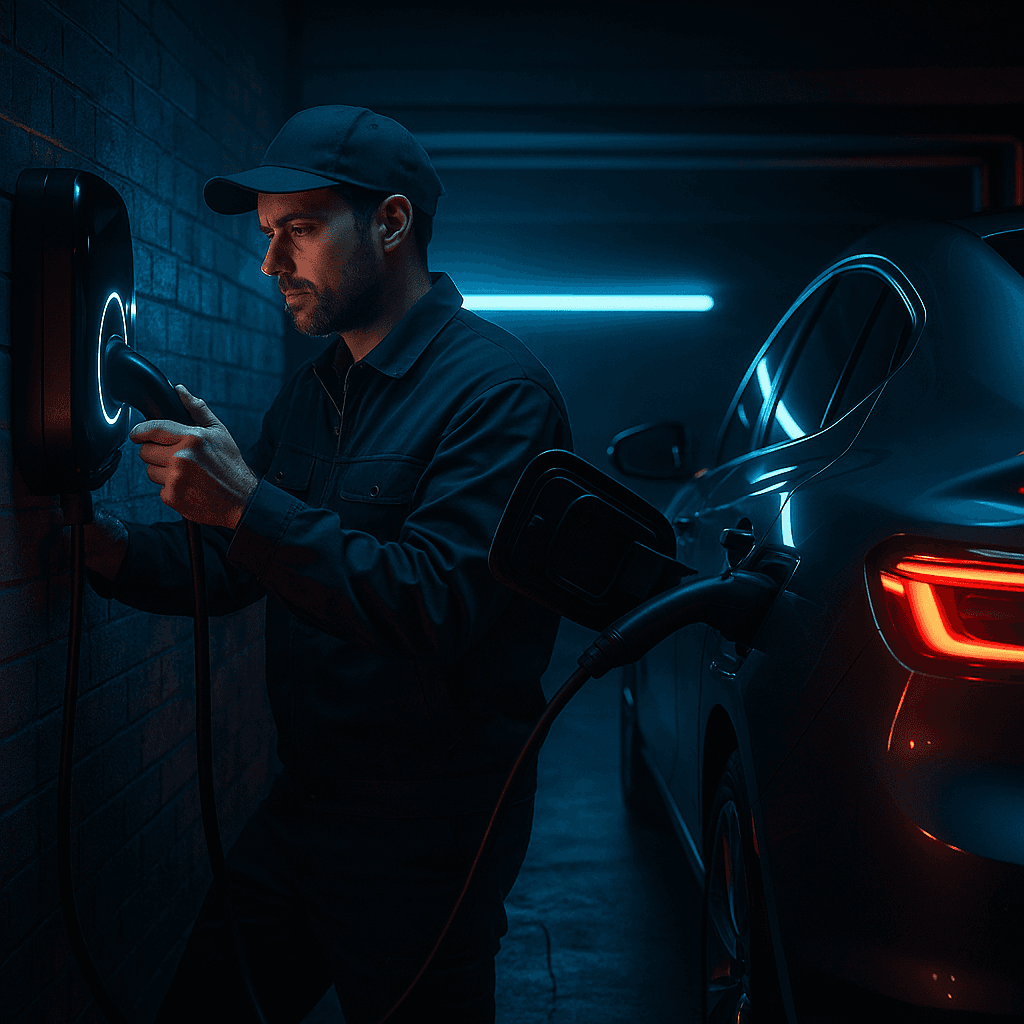
Best Home EV Charger Installers in Las Vegas: 2026 Guide
Find the best home EV charger installers in Las Vegas. Compare costs, permits, and Nevada incentives. Learn how to choose the right electrician and charger for your home.
Best Home EV Charger Installers in Las Vegas: 2026 Guide
Electrifying your commute is easy—until it’s time to pick a home EV charger and find the right electrician. In the Las Vegas Valley, the best EV charger installers combine local permitting know-how with clean, code-compliant work that stands up to desert heat. This guide walks you through the smartest ways to hire, what it should cost, how permits and incentives work in Las Vegas, and the gear to buy—plus a practical checklist to get quotes fast.
Use this as your roadmap whether you live in the City of Las Vegas, Henderson, North Las Vegas, or unincorporated Clark County.
How We Chose the Best EV Charger Installers in Las Vegas
The “best” installer is the one who delivers safe, reliable charging at a fair price—and gets your permit approved the first time. We evaluated options by:
- Nevada licensing: Active Nevada State Contractors Board C-2 Electrical license, proper insurance and bonding
- Local permitting experience: Familiar with City of Las Vegas, Henderson, North Las Vegas, and Clark County Building & Fire Prevention processes
- Code expertise: NEC-compliant load calculations, correct conductor sizing, GFCI where required, labeling, and weather-rated equipment
- Brand experience: Comfortable with Tesla Wall Connector, ChargePoint Home Flex, Emporia, JuiceBox, Wallbox, and others
- Transparent pricing: Itemized quotes, clear change-order policy, documented warranties
- Strong reviews and service: Consistent 5-star workmanship, responsive scheduling, tidy installations
- Incentive guidance: Ability to document costs for tax credits and utility programs
The Best Ways to Hire a Home EV Charger Installer in Las Vegas
Rather than one-size-fits-all, here are the top options by scenario. Each path can connect you with vetted electricians serving the Las Vegas Valley.
1) Qmerit Certified Installers (Best for turnkey, any EV)
- What it is: A nationwide network specializing in home EV charging installations with standardized vetting, insurance checks, and EV-specific training.
- Why it’s strong in Vegas: Streamlined online quoting, photo-based site assessments, and local pros who regularly handle panel upgrades and permits in Clark County.
- Good for: First-time EV owners, homeowners who want a single point of contact, and multi-EV households.
- Get started: https://qmerit.com/ev-charger-installation/
2) Tesla Recommended Electricians in Las Vegas (Best for Tesla owners)
- What it is: Tesla’s directory of independent, trained electricians who frequently install Wall Connectors and know common panel and conduit layouts in local homes.
- Good for: Tesla drivers wanting clean hardwired installs, load sharing between two Wall Connectors, or replacing a NEMA 14-50 with a hardwired setup.
- Find one: https://www.tesla.com/support/find-electrician
3) Licensed Local C-2 Electrical Contractors (Best for complex or custom work)
- What it is: Directly hire a local master electrician—ideal for long runs, trenching to detached garages, or combined projects (e.g., panel upgrade + EVSE + subpanel).
- How to vet:
- Verify license: Nevada State Contractors Board (NSCB) lookup: https://www.nvcontractorsboard.com/
- Ask about recent EV installs in Las Vegas/Henderson
- Request proof of insurance and a permit number prior to work
- Where to find them:
- NV Energy’s contractor directories and energy program partners: https://www.nvenergy.com/
- Angi, Yelp, Google “EV charger installer near me Las Vegas” (filter by 4.7+ rating and 50+ reviews)
4) Solar and Energy Pros (Best if pairing with solar, battery, or panel upgrade)
- What it is: Solar companies and whole-home energy integrators often bundle Level 2 chargers, smart panels, or load management devices with clean installs.
- Good for: Future-proofed systems, dynamic load management, or integrating with rooftop solar.
5) Big-Box Retailer Pro Networks (Best for simple installs and financing)
- What it is: Retailer-referred pros can handle straightforward garage installs and sometimes offer financing.
- Caveat: Vet the individual contractor thoroughly; experience levels vary.
What Does EV Charger Installation Cost in Las Vegas?
Pricing depends on distance from panel, panel capacity, wall construction, and whether you hardwire or install a 240V receptacle.
Typical ranges (labor and materials, excluding the charger):
- Simple 240V receptacle (NEMA 14-50) near panel: $300–$900
- Hardwired Level 2 (30–60A) within ~30 feet: $600–$1,500
- Long run, attic/garage fishing, stucco exterior work: $1,200–$2,500
- Load management device (e.g., DCC, smart panel): $700–$2,000+ installed
- Main panel upgrade (100A to 200A): $1,500–$4,000+ (can be higher with service upgrades)
- Detached garage/trenching: $2,000–$6,000+ depending on length and surfaces
Cost drivers:
- Panel capacity: A proper load calculation may show you can add a 40–60A circuit—or that you need load management or a panel upgrade.
- Distance and routing: Longer conduit runs, attic crawls, drywall or stucco penetrations, and outdoor-rated equipment add cost.
- Hardwire vs receptacle: Hardwiring often avoids GFCI nuisance trips required on some garage receptacles and can support higher amperage.
- Permit and inspections: Fees vary by jurisdiction; reputable electricians will include them.
Tip: Get three itemized quotes. Ask each installer to specify wire gauge, breaker size, circuit length, whether GFCI is required, and the permit number they’ll pull.
Permits, Codes, and Inspections in the Las Vegas Area
You’ll likely need an electrical permit for a new 240V circuit or hardwired EVSE. Licensed contractors typically pull permits and schedule inspections.
Local jurisdictions:
- City of Las Vegas: https://www.lasvegasnevada.gov/
- City of Henderson: https://www.cityofhenderson.com/
- City of North Las Vegas: https://www.cityofnorthlasvegas.com/
- Clark County Building & Fire Prevention (unincorporated): https://www.clarkcountynv.gov/
Code basics your installer should follow (based on the National Electrical Code as adopted locally):
- Dedicated circuit: EVSE is a continuous load; size the circuit at 125% of the charger’s rated current (NEC 625/210). Example: a 48A charger typically requires a 60A breaker and #6 AWG copper (installer confirms specifics).
- Load calculation: NEC Article 220 or an approved energy management solution to ensure your service can handle the additional load.
- GFCI protection: Garages and outdoor receptacles often require GFCI. Some EVs and NEMA 14-50 setups experience nuisance trips—hardwiring an EVSE can help.
- Outdoor installs: Use NEMA 3R/4-rated enclosures, proper conduit, drip loops, and labeling. Protect cables from sun and physical damage.
- Disconnection means: Depending on amperage and location, a marked disconnect may be required within sight of the EVSE.
Pro tip for Vegas heat: Choose equipment rated for high ambient temperatures and provide shade if mounting outdoors on sun-facing walls.
Rebates, Tax Credits, and EV Rates in Nevada
- Federal tax credit (residential): The Alternative Fuel Vehicle Refueling Property Credit (IRS Form 8911) provides a 30% tax credit on eligible home EV charging equipment and installation, up to $1,000, for property placed in service through 2032. Keep your itemized receipt. Consult a tax professional.
- NV Energy programs: Check current offers for residential customers, including EV time-of-use (TOU) rates that lower off-peak charging costs and any managed charging or smart charger incentives that may be available. Program details change—verify here: https://www.nvenergy.com/
- HOA/condo considerations: Nevada law provides certain “right-to-charge” protections for common-interest communities, subject to reasonable rules and owner-paid costs. Review your CC&Rs and consult legal guidance as needed.
Which Home Charger Should You Buy in Las Vegas?
Most homeowners choose a Level 2 charger (240V) to add 25–45 miles of range per hour, depending on your vehicle and amperage.
Key decisions:
- Amperage: 40A (on a 50A breaker) is a sweet spot; 48A (on a 60A breaker) maximizes many EVs. Check your vehicle’s onboard charger limit.
- Hardwire vs plug-in: Hardwired is cleaner, supports higher current, and avoids some GFCI issues. Plug-in (NEMA 14-50) offers portability.
- Smart features: Wi-Fi/Bluetooth scheduling, energy monitoring, load sharing for two EVs, and utility integrations are helpful.
- Outdoor rating: Choose NEMA 3R/4 and a flexible cable rated for high temps if mounting outside.
- Popular models: Tesla Wall Connector (great for Teslas and works with J1772 via adapter), ChargePoint Home Flex, Emporia Level 2, JuiceBox, Wallbox Pulsar Plus. Match charger output to your circuit.
If you already know the EVSE you want, share the exact model with your installer so they can size conductors and breakers correctly.
Fast-Track Checklist: What to Send Installers for Accurate Quotes
Gather this info and photos to cut days off your timeline and get firmer pricing:
- Service details: Panel amperage (e.g., 100A/200A) and main breaker rating; clear photo of panel interior with all breakers visible
- Location: Photo of desired charger spot, path from panel to charger (inside/outside walls), any obstacles
- Distances: Approximate feet from panel to charger location
- Home details: Year built, single- or two-story, attic/crawl access, exterior is stucco/brick/wood
- EV details: Make/model and max onboard charging rate; plan for a second EV?
- Preferences: Hardwired vs NEMA 14-50 receptacle; charger model if chosen; indoor vs outdoor mount
Questions to ask:
- Will you pull the permit and schedule inspection? What’s the permit fee?
- What breaker size and wire gauge will you use? Will the circuit be copper or aluminum?
- Do I need GFCI protection for this setup? If so, receptacle or breaker?
- What are the total labor/material costs and any potential adders?
- How long is your workmanship warranty? Who handles manufacturer warranty claims?
- What’s the earliest install date, and how long will it take?
Red flags:
- “No permit needed” for a new 240V circuit
- Vague pricing without materials/breaker sizes
- No proof of license or insurance
Timeline: From Quote to Plug-In in Las Vegas
- Day 0–2: Submit photos and details; receive preliminary quotes
- Day 2–5: Site visit if needed; finalize scope and price
- Week 1–2: Contractor pulls permit; scheduling
- Install day: 2–6 hours for typical installs; longer for panel upgrades or trenching
- Inspection: Usually within a few days; your installer coordinates
FAQs: Home EV Charging in Las Vegas
- Do I need a permit? In most cases, yes—for a new 240V circuit or hardwired EVSE. Your licensed electrician should handle it.
- Can I use my dryer outlet? Sometimes, but it must be on a dedicated circuit and appropriately sized. Load calculations and GFCI rules apply. Many homeowners opt for a new dedicated circuit.
- What amperage should I choose? Match your EV’s onboard charger and future needs. 40A–48A Level 2 covers most use cases.
- How fast will it charge? Roughly 25–45 miles of range per hour for a 40–48A Level 2 charger, depending on the EV.
- Will GFCI trip my charger? Some plug-in EVSEs on GFCI-protected receptacles can nuisance trip; hardwiring often avoids this. Your electrician will advise based on code and equipment.
- What about apartments/condos? Work with your HOA/property manager early. You may need an engineering letter, load management, and proof of insurance, plus adherence to community rules.
The Bottom Line
The best home EV charger installers in Las Vegas combine strong electrical fundamentals with local permit expertise and gear that thrives in desert conditions. Whether you go through Qmerit, a Tesla-recommended electrician, or a trusted local C-2 contractor, get three itemized quotes, confirm permitting, and choose a charger that fits your EV and future plans. With the federal tax credit and potential NV Energy programs, you can lower your net cost and start every day with a full battery—no casino luck required.
Ready to begin? Collect the photos in the checklist above and request quotes from at least two of the options in this guide today.
Use our tools alongside articles: map stalls before you drive, run numbers on gas vs electric, and compare rental options when you need a car in town.